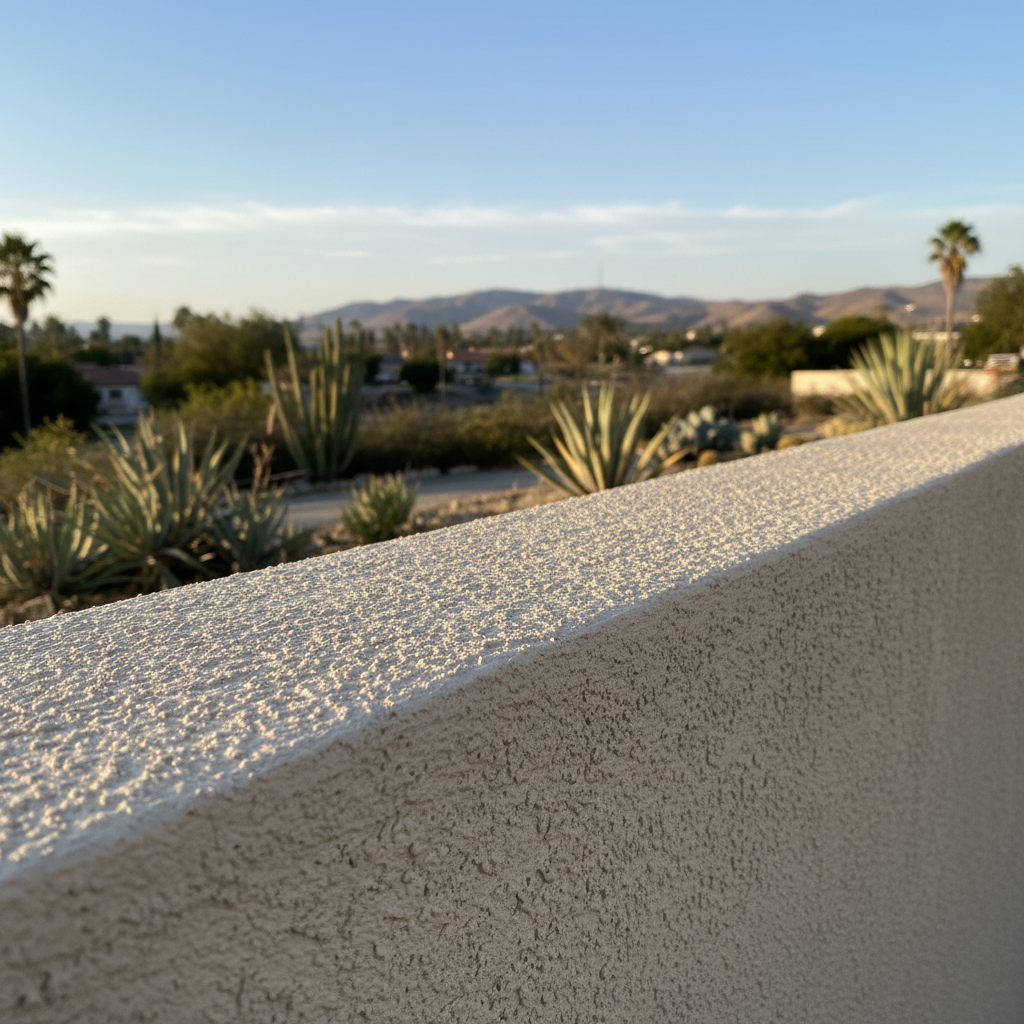
Hairline cracks in your exterior walls might look minor, but out here in Riverside, CA, small issues turn big fast. Between the scorching summer heatwaves in neighborhoods like Orangecrest and those rare heavy winter downpours, the local climate puts exterior plaster through heavy stress. You do not need an engineering degree to check your own walls, but you do need to know what to look for and when to step back and call in backup. Riverside Stucco & Plastering recommends a proper walk-around inspection without missing the hidden red flags.
Before You Start: Getting Your Eyes Ready
Grab a flashlight, a notepad, and a basic metal tape measure. You do not need fancy moisture meters right off the bat. Pick a bright day when the sun hits your walls at an angle, because shadowing makes texture irregularities and hairline fractures much easier to spot. Walk the entire perimeter of your house and clear away any overgrown bushes, stacked firewood, or patio furniture touching the exterior walls. Stucco needs room to breathe, and blocked airflow traps moisture against the surface.
During the Walkthrough: What You Can Spot Yourself
Start at the foundation line and work your way up to the roofline. You are looking for a few specific things:
- Spiderweb cracking or map cracking that is wider than a credit card edge.
- Dark staining or streaks running down from window sills and roof eaves, which usually points to flashing failures.
- Bulging or spongy-feeling areas where the finish coat has actually detached from the wire lath underneath.
- White powdery residue called efflorescence, meaning moisture is moving through the wall and pushing salts out.
If you see minor hairline cracks under an eighth of an inch, those are often just normal shrinkage. You can usually patch those yourself with a quality elastomeric caulk or a small tub of acrylic patch. But the moment you spot deep cracking, rust stains bleeding through the plaster, or sections that sound hollow when you tap them gently with your knuckles, you are looking at structural or moisture intrusion problems.
When to Put Down the Notepad and Call a Pro
There is a fine line between routine maintenance and a serious repair job. If you notice multiple cracks converging near window corners, or if the bottom six inches of your wall are crumbling near the soil line, do not try a DIY patch. That is usually a sign that the weep screed is blocked or the weather resistive barrier behind the stucco has failed. At Riverside Stucco & Plastering, our team gets calls all the time where a homeowner tried to slap masonry paint over a rotting wall base. Catching the failure early saves you thousands in framing repairs.
Make Stucco Maintenance a twice-a-year habit after the severe seasonal changes pass. A quick Saturday morning walk around your property keeps you ahead of problems and keeps your home looking solid for many years.